

What is Mythos AI and Why Could It Be a Threat to Global Cybersecurity?
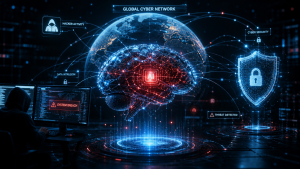
Artificial Intelligence has transformed industries, accelerated innovation, and reshaped the digital world. From automating customer support to enhancing cybersecurity defenses, AI has become one of the most powerful technologies of the modern era. However, alongside its benefits comes a darker side — the rise of malicious or uncontrolled AI systems that can be exploited for cybercrime, misinformation, surveillance, and digital warfare.
One of the emerging concerns in cybersecurity discussions is Mythos AI — a term increasingly associated with advanced autonomous AI systems capable of generating deceptive content, automating cyberattacks, manipulating information, and operating with minimal human oversight. While “Mythos AI” may not yet refer to a single globally recognized platform, the concept represents a growing category of highly sophisticated AI-driven technologies that could pose serious risks to governments, businesses, and individuals worldwide.
As cyber threats evolve rapidly, experts fear that AI-powered systems like Mythos AI could become the next major challenge in global cybersecurity.
Understanding Mythos AI
Mythos AI can be described as an advanced artificial intelligence framework designed to simulate human intelligence at a highly sophisticated level. These systems are capable of:
- Generating realistic text, images, audio, and videos
- Learning from massive datasets
- Automating decision-making
- Mimicking human behavior
- Conducting autonomous digital operations
- Adapting strategies in real time
Unlike traditional software that follows predefined instructions, advanced AI systems continuously learn and improve. This makes them extremely powerful — but also potentially dangerous if used irresponsibly or maliciously.
The primary cybersecurity concern is not AI itself, but how threat actors can weaponize such technologies.
Why Mythos AI Could Become a Major Cybersecurity Threat
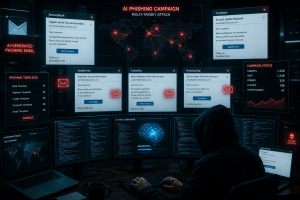
- AI-Powered Phishing Attacks
Traditional phishing emails often contain grammatical mistakes and suspicious wording. AI-driven systems can now generate highly convincing phishing messages that perfectly imitate:
- CEOs
- Government officials
- Banks
- Tech companies
- Business partners
Cybercriminals can use AI to personalize attacks using publicly available information from social media, websites, and leaked databases.
This dramatically increases the success rate of phishing campaigns.
Example threats include:
- Fake invoice emails
- AI-generated HR messages
- Realistic password reset scams
- Business email compromise attacks
Deepfake Technology and Identity Fraud
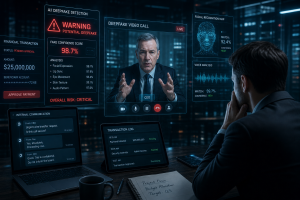
One of the most alarming capabilities linked with advanced AI systems is deepfake generation.
AI can now create:
- Fake voice recordings
- Fake video calls
- Synthetic interviews
- Artificial facial expressions
Cybercriminals may impersonate:
- Company executives
- Politicians
- Celebrities
- Financial managers
This creates enormous risks for:
- Financial fraud
- Corporate espionage
- Political manipulation
- Social engineering attacks
Imagine receiving a video call from your company CEO instructing you to transfer funds urgently — except the CEO is entirely AI-generated.
That scenario is no longer science fiction.
Automated Malware Development
Traditionally, malware development required advanced programming expertise. AI systems now have the potential to automate parts of the malware creation process.
Potential risks include:
- AI-generated ransomware code
- Self-modifying malware
- Adaptive trojans
- Automated exploit discovery
- Intelligent botnets
These AI-driven cyber weapons could evolve faster than traditional security tools can detect them.
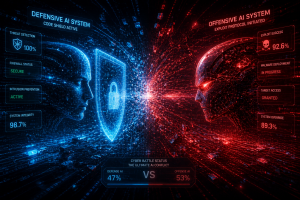
AI vs AI Cyber Warfare
The future of cybersecurity may involve AI systems attacking other AI systems.
Organizations increasingly use AI for:
- Threat detection
- Intrusion prevention
- Fraud analysis
- Behavioral monitoring
However, attackers can also deploy AI to bypass these defenses.
This creates an “AI arms race” where:
- Defensive AI evolves
- Offensive AI adapts
- Cyberattacks become more intelligent
- Detection becomes more difficult
Such an environment could dramatically increase the complexity of global cybersecurity operations.
Misinformation and Psychological Manipulation
Mythos AI-like systems could also threaten information integrity.
AI can mass-produce:
- Fake news articles
- Manipulated social media posts
- AI-generated propaganda
- Fabricated evidence
- Synthetic public statements
This can influence:
- Elections
- Public opinion
- Financial markets
- International relations
The ability to generate convincing fake content at scale poses serious risks to societal trust and democratic systems.
Autonomous Hacking Operations
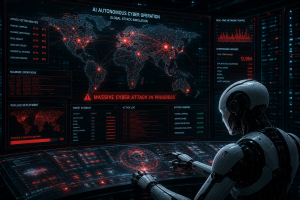
One of the biggest fears surrounding advanced AI is autonomous cyberattacks.
Instead of manually controlling attacks, hackers could deploy AI agents capable of:
- Scanning networks
- Identifying vulnerabilities
- Launching exploits
- Avoiding detection
- Adjusting attack methods automatically
These systems could potentially operate 24/7 without human intervention.
If widely deployed, autonomous AI hacking tools could overwhelm global cybersecurity infrastructures.
Risks to Critical Infrastructure
Critical infrastructure sectors are especially vulnerable to AI-driven cyber threats.
Potential targets include:
- Power grids
- Airports
- Hospitals
- Financial systems
- Telecommunications
- Water supply systems
- Transportation networks
An advanced AI attack against critical infrastructure could cause:
- Massive economic damage
- Public panic
- Service disruptions
- National security crises
Governments worldwide are increasingly concerned about AI-powered cyber warfare targeting national infrastructure.

Data Privacy and Surveillance Concerns
AI systems rely heavily on massive datasets.
This creates concerns regarding:
- Unauthorized data collection
- Facial recognition abuse
- Behavioral tracking
- Mass surveillance
- Personal profiling
When combined with weak cybersecurity controls, AI technologies may enable unprecedented levels of digital surveillance.
Why Traditional Cybersecurity May Not Be Enough
Traditional cybersecurity tools are often reactive. They detect threats based on:
- Known signatures
- Existing attack patterns
- Historical data
AI-powered attacks are different because they can:
- Mutate rapidly
- Learn from failures
- Adapt in real time
- Mimic legitimate user behavior
This means organizations must move toward:
- AI-driven defense systems
- Behavioral analytics
- Zero-trust architectures
- Continuous threat intelligence
- Real-time monitoring
The cybersecurity landscape is shifting from static defense to intelligent adaptive security.

How Organizations Can Protect Themselves
To reduce the risks associated with advanced AI threats, organizations should adopt proactive cybersecurity strategies.
Key Security Measures
Employee Awareness Training
Human error remains a major vulnerability. Employees should be trained to recognize:
- AI-generated phishing attempts
- Deepfake scams
- Social engineering attacks
Multi-Factor Authentication (MFA)
MFA adds an extra layer of protection against credential theft.
AI-Based Threat Detection
Organizations should deploy modern security systems capable of detecting unusual behavioral patterns.
Regular Security Audits
Routine vulnerability assessments help identify weaknesses before attackers exploit them.
Zero Trust Security Models
Never trust users or devices automatically — continuously verify access requests.
Data Encryption
Encrypting sensitive data reduces the impact of breaches.
Incident Response Planning
Businesses must prepare for AI-driven cyber incidents with proper response strategies.
The Role of Governments and Global Regulation

The rise of AI-powered cyber threats has sparked discussions about international AI regulation.
Experts believe governments should establish:
- Ethical AI development frameworks
- AI transparency standards
- Cybersecurity compliance laws
- International cooperation agreements
- Restrictions on autonomous cyber weapons
Without proper oversight, malicious AI technologies could become a major global security crisis.
The Future of AI and Cybersecurity
Artificial intelligence itself is not the enemy. In fact, AI is already helping cybersecurity professionals:
- Detect threats faster
- Analyze malware
- Automate security operations
- Predict attack patterns
The real danger lies in how powerful AI technologies are used.
As AI systems become more advanced, the cybersecurity industry must evolve just as rapidly. Businesses, governments, and security professionals need to prepare for a future where AI-driven threats become more intelligent, scalable, and difficult to stop.
The battle between cybersecurity and cybercrime is entering a new era — one powered by artificial intelligence.

Conclusion
Mythos AI represents the growing concern surrounding highly advanced artificial intelligence systems and their potential misuse in cybercrime and digital warfare. From AI-powered phishing attacks and deepfake fraud to autonomous hacking and misinformation campaigns, the risks associated with malicious AI are becoming increasingly real.
While AI offers enormous benefits to society, it also introduces unprecedented cybersecurity challenges that cannot be ignored.
Organizations must strengthen their defenses, governments must establish responsible AI regulations, and cybersecurity professionals must continuously adapt to emerging AI-driven threats.
The future of cybersecurity will not simply depend on stronger firewalls or antivirus software — it will depend on how humanity manages the power of artificial intelligence itself.
At Apprise Cyber, we help businesses stay protected against evolving cyber threats, including AI-powered attacks, phishing scams, ransomware, and advanced digital risks.
Secure your organization with professional cybersecurity solutions, awareness training, vulnerability assessments, and proactive threat protection before cybercriminals strike.