
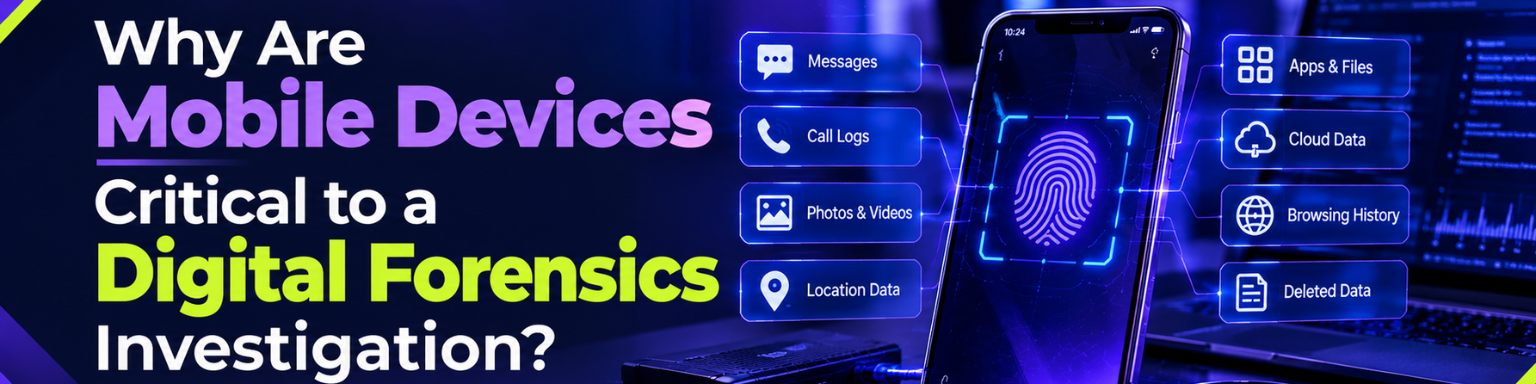
Mobile devices are crucial in a digital forensics investigation. They store various types of evidence, including call logs and deleted files. This evidence helps reconstruct a suspect’s timeline and connections. Investigators extract this data through logical, file system, or physical acquisition methods. They then correlate it with GPS and communication records. This cross-checking helps confirm findings without relying solely on witness testimony. Encryption and remote-wipe features create acquisition challenges that require lawful, authorized methods.
What Makes a Mobile Device Such a Valuable Source of Evidence?
Mobile devices are a valuable source of evidence. They travel with their owner and continuously record activity. They create a timestamped record of communication, location, and behavior. Investigators use this record to:
- Confirm alibis
- Establish timelines
- Link suspects to victims or crime scenes
Unlike a desktop computer, a phone can capture a real-time context. This includes where a person was, who they contacted, and what they searched.
What Kind of Evidence Can Investigators Actually Pull from a Phone?
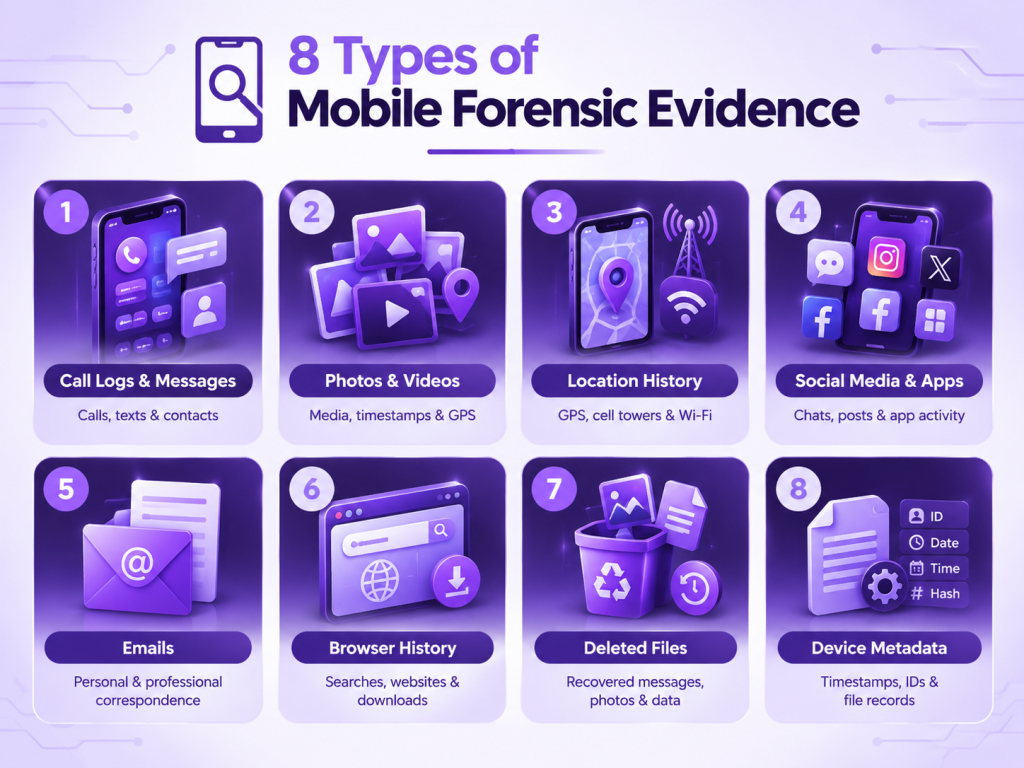
A mobile device can contain eight major categories of forensic evidence:
- Call Logs and Text Messages
These records show who contacted whom and when, through messages or calls.
- Photos and Videos
Photos and videos often have embedded metadata, such as time and GPS coordinates.
- Location History
This history includes GPS data, cell tower logs, and Wi-Fi connection records.
- Social Media and App Data
This data includes messages, posts, and activity from apps like WhatsApp and Facebook.
- Emails
Emails are professional and personal correspondence.
- Browser History
This history records searches, visited sites, and download activity.
- Deleted Files
Messages, photos, and app data that can often be recovered fall into this category.
- Device Metadata
Metadata includes timestamps, device IDs, and file modification records.
Each item functions as a digital artifact that links back to a specific action, time, or location.
How Does Mobile Data Help Investigators Piece Together a Timeline?
Mobile data helps investigators build a timeline. They correlate timestamps across various sources. These sources include messages, GPS pings, and app activity. A call, location ping, and text message may occur within minutes. In such cases, investigators can place a suspect’s device at a specific location during an event. They do not have to rely only on witness memory.
Why Do Location and Communication Records Matter So Much?
Location and communication records are important in digital forensics investigations. They provide corroborating evidence that is independent of testimony. GPS data can place a device at a crime scene. Call records and messaging logs reveal relationships, motives, and plans between parties. Sometimes, the GPS data is unavailable or disabled. Cell tower logs and Wi-Fi connection history then serve as secondary location evidence.
What Makes Mobile Devices Harder to Examine Than Other Types of Digital Evidence?
Mobile devices are harder to examine than other digital evidence. Their manufacturers build them with encryption, authentication locks, and remote-wipe capabilities. These features protect user data. Even with lawful, authorized methods, forensic examiners still face challenges. Access restrictions, biometric locks, and operating-system-level security limit acquisition.
How Does Encryption Hinder Evidence Access?
Encryption converts stored data into unreadable code. It requires a key, passcode, or biometric input to unlock. Device encryption can limit or delay evidence acquisition. This hindrance is especially likely on devices with full-disk encryption enabled by default. These devices include current-generation Android and iOS devices. Depending on device compatibility, encryption status, and legal authorization, forensic examiners use:
- Logical acquisition
- File system acquisition
- Physical acquisition methods
How Is Evidence from a Phone Kept Valid and Usable in Court?
Evidence from a phone can stay valid and usable in court. This occurs when investigators document three core requirements throughout the process:
- Chain of Custody
It includes a documented record of who handled the device and when
- Data Integrity
It involves verification using hash values. This verification confirms data was not altered during extraction.
- Legal Authorization
It is a warrant or consent that permits lawful access to the device.
Without these three elements, a court may reject digital evidence from a mobile phone. This rejection can still occur even if the evidence has investigative value.
Which Types of Cases Depend Most On Mobile Forensics?
Mobile forensics supports four primary investigation types:
- Criminal Investigations
Criminal investigations include homicide, assault, and theft cases. These cases rely on location and communication evidence.
- Corporate Investigations
These cases include internal misconduct, data theft, and policy violations.
- Fraud Investigations
These investigations include financial crimes traced through transaction records and messaging apps.
These cases include cybersecurity breaches involving compromised mobile endpoints.
Each case type draws on the same underlying evidence categories:
- Communication records
- Location data
- Application artifacts
FAQs
Question 1: Why Do Mobile Devices Matter So Much in an Investigation?
Answer: Mobile devices function as a continuous, timestamped record. They track a person’s communication, location, and digital activity. Their evidentiary value comes from 3 factors:
- Volume of stored data
- Precision of timestamps
- Corroboration across various data sources
Question 2: Can You Recover Deleted Texts from a Phone?
Answer: In many cases, forensic data extraction can recover deleted text messages. Deleted data may remain in device storage until new data overwrites it.
Question 3: Do Investigators Need a Warrant to Examine a Phone?
Answer: Investigators generally need a warrant or the device owner’s consent. This permission allows them to lawfully examine a mobile device. However, requirements vary by jurisdiction and case type.